A tool, machine, or piece of software that grows out of local
practice and material reality, rather than abstract market demands
or fashion.
A technology whose workings can be understood, repaired, and
extended by the people who depend on it, without any specialized
training.
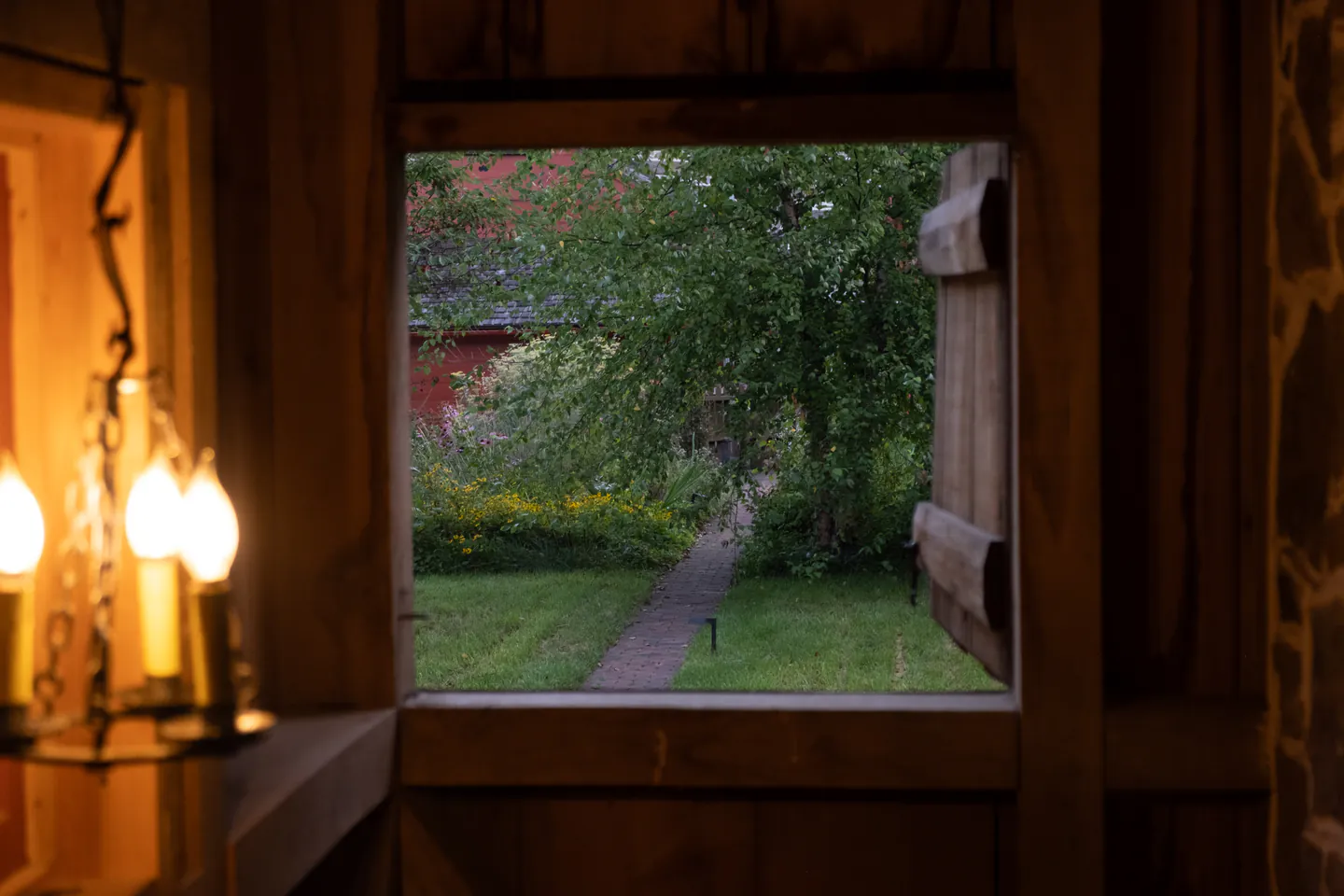
We are a technical design studio operating out of a timber frame barn in rural
Pennsylvania.
Our goal is to resist "the great software quality collapse" by building
repairable and understandable technology.
The studio, rural Pennsylvania.
We seek to ever so slightly extend the vernacular; to put a thin veneer of
technology around it.
Not as a required failure point, but as an optional extension to the human
toolset.
We do not believe in using high abstraction UI to achieve a lay, wide
audience.
We believe in low abstraction mechanisms- text, command line, gears,
pulleys, and embedded software.
In mainstream computing, ease of use is usually implemented as superficial
simplicity, as an additional layer of complexity that hides the underlying
layers.
Low abstraction understandability is superior to High abstraction comfort
and polish.
We first create great technology, then seek demand.
Seeking demand first, letting the market dictate design, is how we got to
where we are today- disposable javascript web apps, $80k trucks that
cannot be repaired, "sustainable" smart buildings that last only a few
decades.
~
On Firmware
Firmware is the branch of software engineering that is nearest to the real
material world and therefore, we believe, the branch of software engineering that is nearest to the work of tending
God's creation.
Programming in C and assembly is a form of monastic asceticism. Renouncing
the comfort of abstractions, submitting to mental discipline, repeating
simple gestures: Compute, Store, Branch. The holy trinity of computation.
Three elementary operations from which all complexity emerges.